The Problem
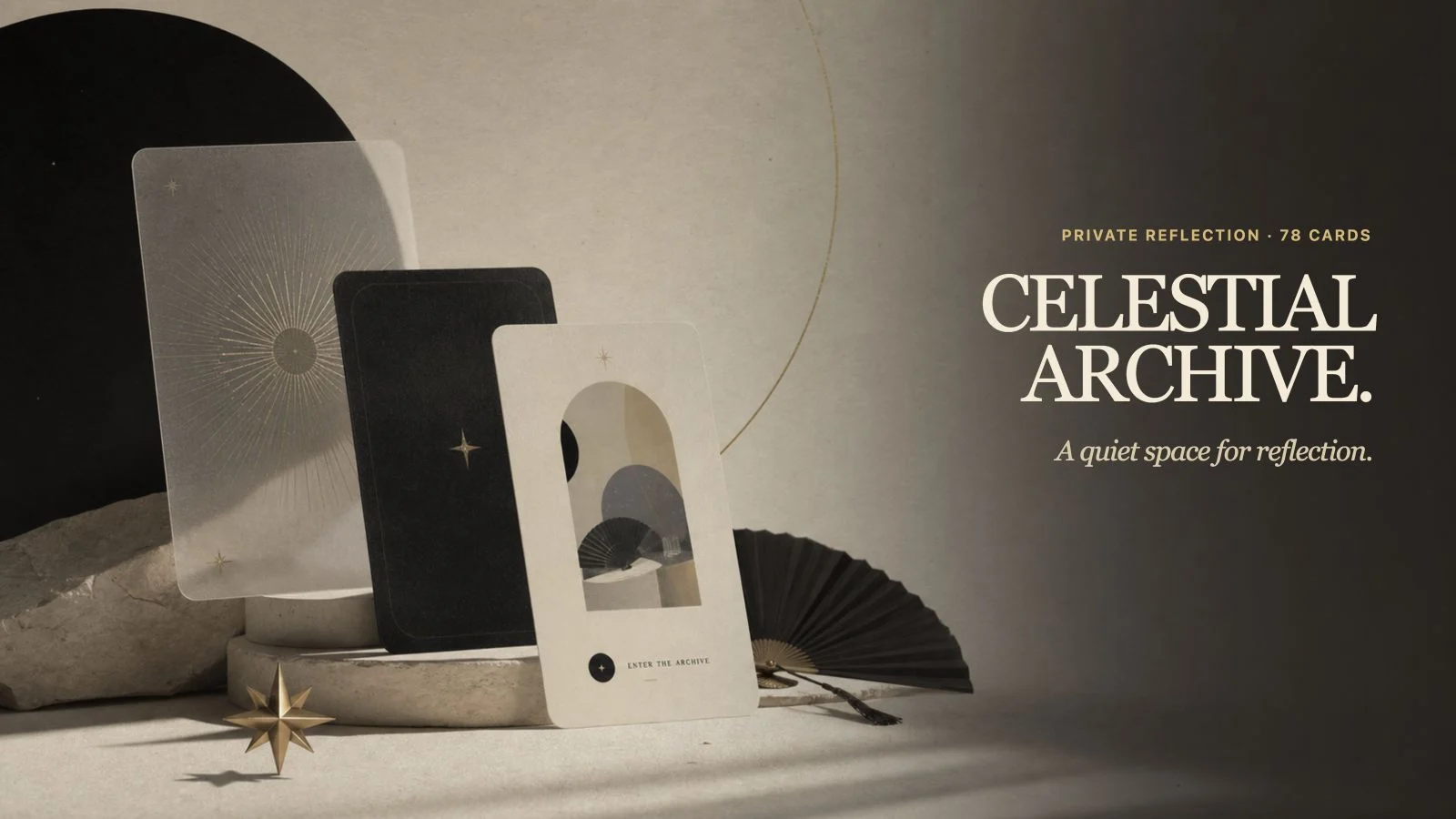
Reflection tools can feel noisy, generic, or careless with personal data. Celestial Archive approaches the experience as a private ritual: calm enough to invite thought, clear enough to use without instruction, and local-first by default.
The Intention
I wanted the interface to slow the moment down without making the system difficult to understand. The visual atmosphere creates a threshold; straightforward controls, bilingual copy, and explicit privacy language keep people oriented once they enter.
Design Decisions
The experience begins with a short opening sequence, then moves into clear rooms for choosing a reading, viewing cards, and keeping personal notes. English and Chinese are treated as one interface rather than separate versions. Motion and sound add atmosphere, but the core reading flow remains available when those enhancements are reduced.
The Technical System
The project combines a complete 78-card system with bilingual interaction, responsive layouts, optional gesture input, and an offline package. Readings remain on the user’s device unless they deliberately save or export them.
The web release is static and installable. The Android package uses a Trusted Web Activity, while the offline package preserves a direct browser route for people who prefer not to install anything.
The Challenge
The hardest balance was keeping the experience cinematic without letting atmosphere obscure navigation. That meant giving experimental interactions a dependable fallback and treating privacy and accessibility as part of the product language—not as footnotes.
What I Learned
Atmosphere only works when the system underneath it stays understandable. The strongest design decisions were the ones that supported trust: explicit privacy, accessible controls, and a graceful core experience that does not depend on experimental features.
Next Iteration
The next pass will deepen the card artwork and reading rhythm while preserving the same local-first foundation.