
The Problem
Most personal-development apps measure screen activity or ask users to claim skills. Students need a more credible way to grow: do something useful in the real world, reflect on it, and keep proof of what the experience demonstrated.
The Intention
QuestMark turns ordinary life into small, unusual missions. A student might interview a local founder, spot poor public design, teach a difficult concept, or improve a confusing message. Each mission is designed to create a story worth remembering—not another streak maintained inside an app.
Design Decisions
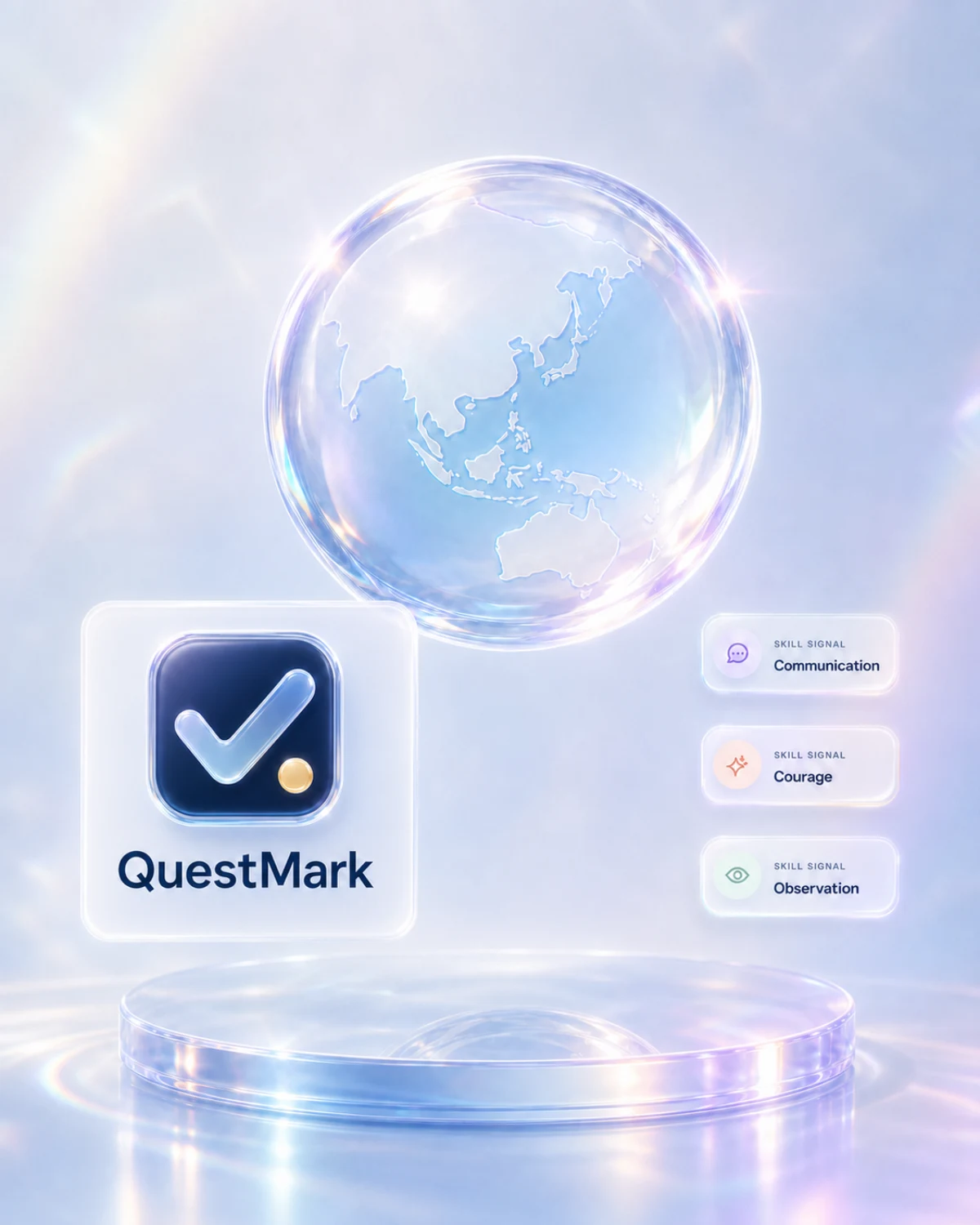
The interface uses a luminous liquid-glass world as the centre of the daily quest experience. Mission details stay direct and practical around it: location, time, evidence, skills, safety, and XP. Motion makes progress feel alive while reduced-motion support keeps the core experience calm and accessible.
The Technical System
The installable PWA is built with Next.js, React, TypeScript, and CSS. Its local recommendation model ranks a small set of Kuala Lumpur quests on-device. Evidence photos stay in IndexedDB, progress metadata stays local, and the exported app works offline after the first visit.
The Trust Model
Evidence is private by default. Users decide what to share, can blur themselves before using visual proof, and can choose individual Proof Cards for a portfolio. Peer verification is optional rather than a gate to participation.
What I Learned
Gamification becomes more meaningful when every reward points back to a real experience. The strongest part of QuestMark is not the XP counter; it is the chain from mission, to evidence, to reflection, to a skill claim that has context behind it.
Next Iteration
The next step is a small student pilot to test whether the missions feel safe, specific, and genuinely worth leaving the screen for.